What Is Media Mix Modeling?
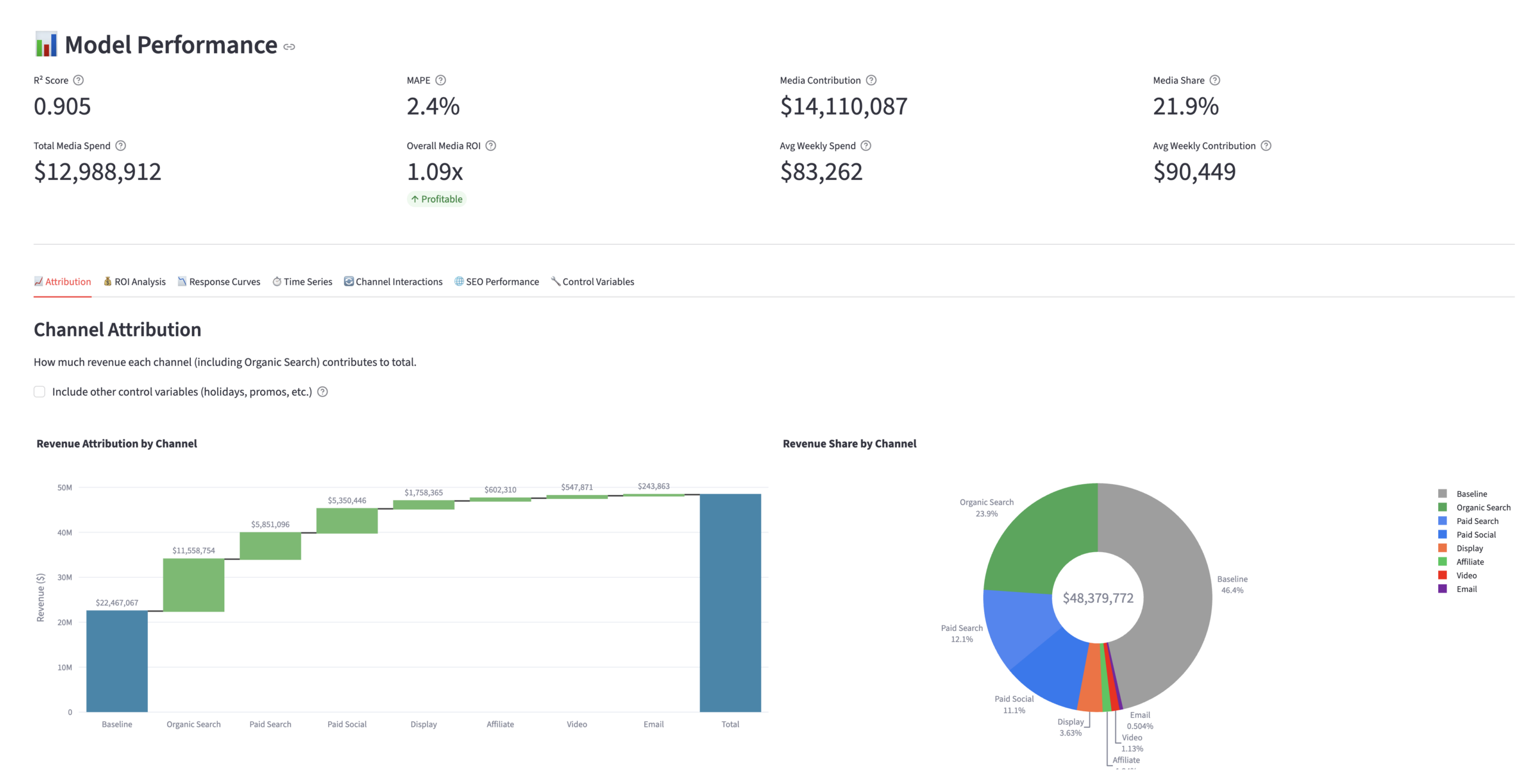
Bayesian Media Mix Modeling (MMM) is a sophisticated statistical method for analyzing the incremental value of paid media channels. MMM compares revenue changes against a lengthy period of media spend while factoring in variables including seasonality, promotions and external events.
The reason why media mix modeling has gained in popularity in recent years is due to the difficulty in attributing value while using click-based attribution. MMM is not impacted by cookie-blocking, last-click attribution, tagging issues and other factors that plaque click-based attribution. Outdated attribution methods often results in budgets being misallocated to low-incremental revenue driving activities that look good superficially such as paid brand search terms.
What Does MMM Do?
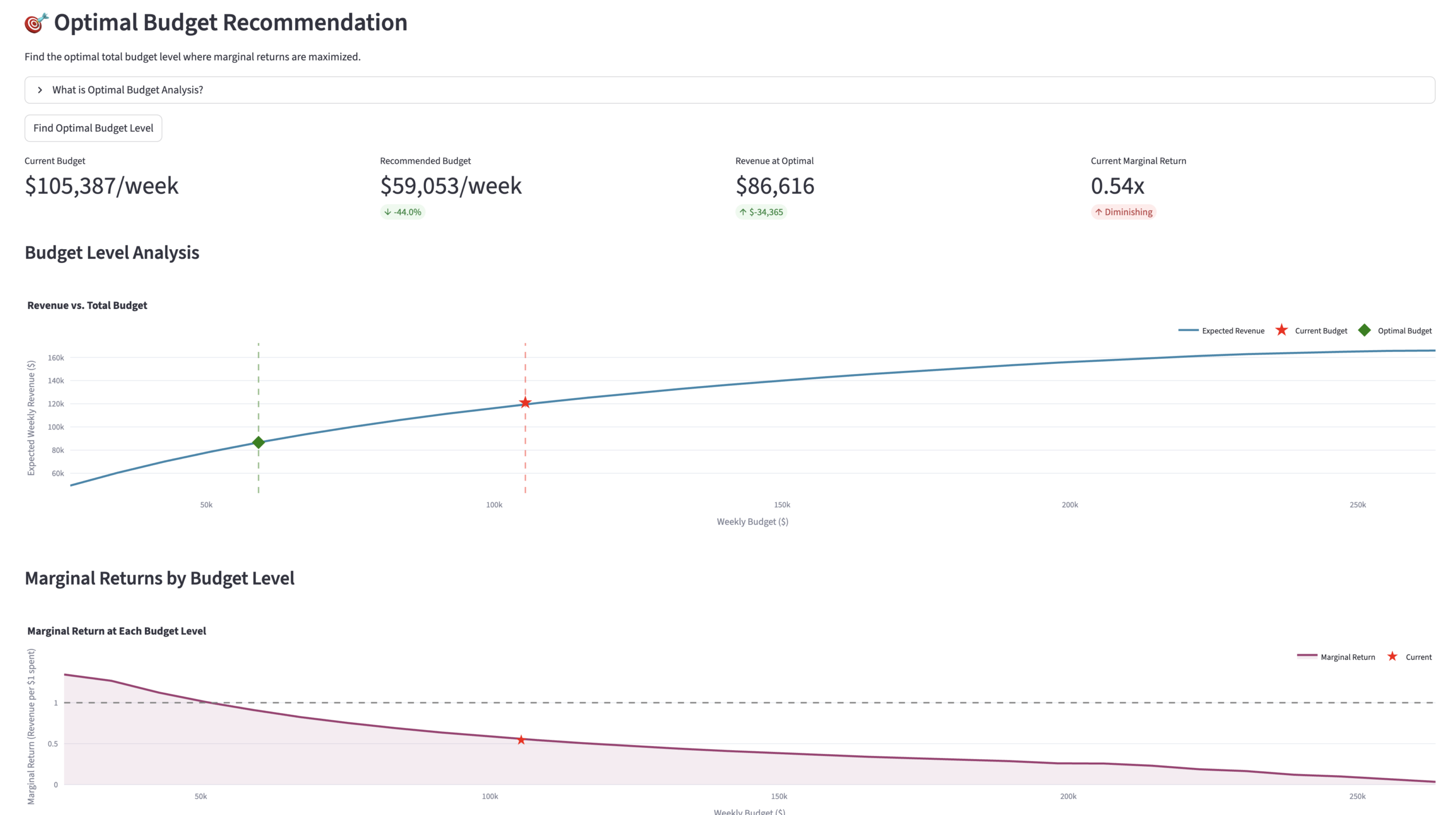
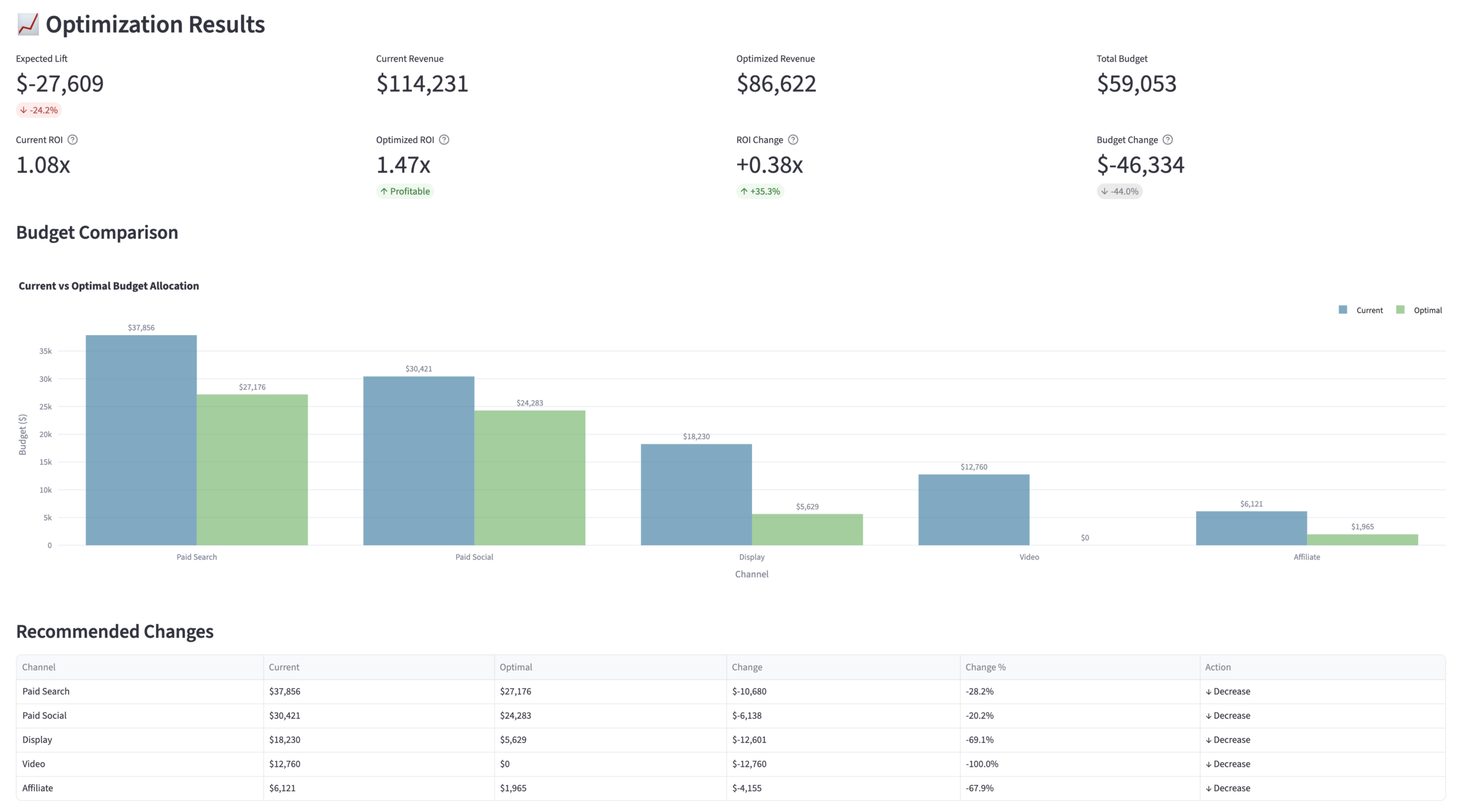
Media Mix Modeling helps performance marketers and CMO's understand the true impact of paid media channel mix. An effective MMM model can help guide budgeting decisions more effectively than click-based attribution methods. The goal is to find the right mix of channels or platform allocation within your budget.
Does your Instagram ad performance look terrible compared to Google Ads? Does Pinterest Ads seem to have mediocre ROAS? Within a click-attribution context like GA4, those platforms probably do look terrible. But clicks are not necessarily an indicator of influence. This is where Media Mix Modeling can be effective in measuring.
Media Mix Modeling Requirements
MMM seeks to uncover insights that wouldn't be possible through click-based analytics like Google Analytics 4 (GA4) but it's not a perfect solution either. During my testing, I've found the following limitations:
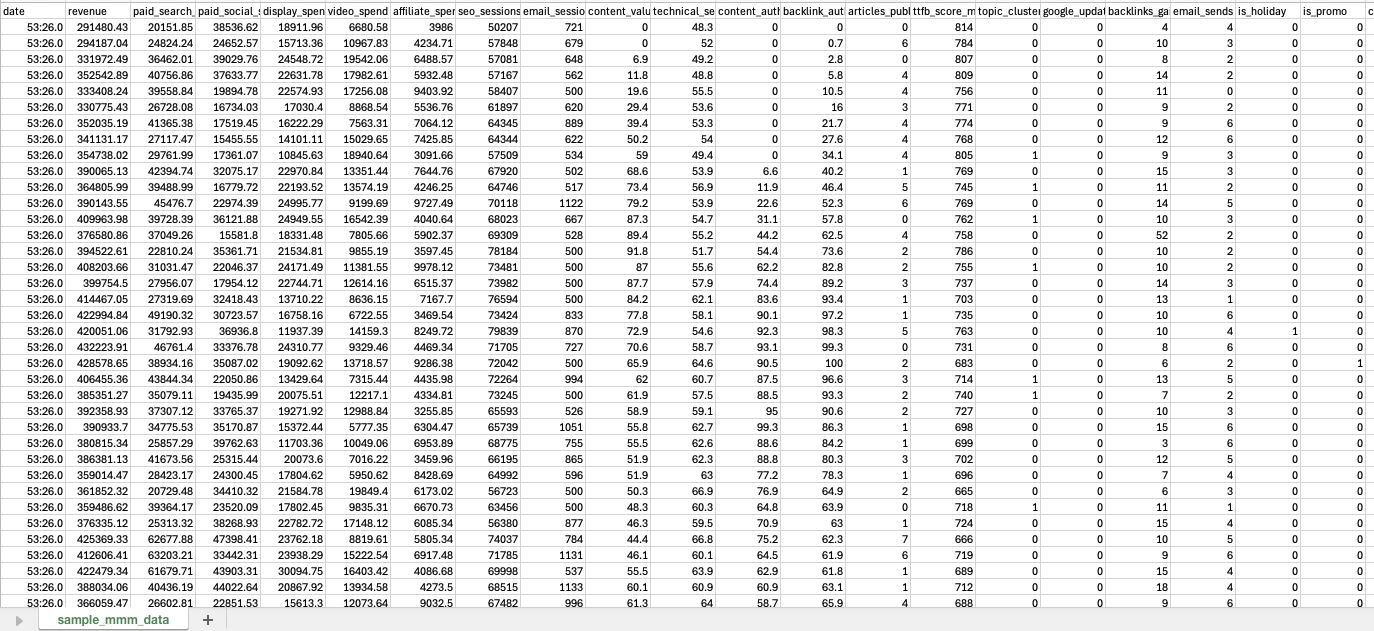
- You need a multi-channel marketing mix for MMM to work
- Your daily or weekly spend needs to have variance
- You need a minimum of one year's worth of media spend, but preferably 2 or 3 years worth
- Substantial marketing spend is often needed to generate statistically-significant sample size

Despite potential limitations, Media Mix Modeling has significantly more potential for assessing marketing value than GA4 or in-platform analytics do. It's easy to game individual channel metrics especially if you're a larger company with a diverse marketing mix. With MMM, it's not really something you can game. You either drive incremental value or you don't.
How MMM Could Be Useful for SEO
As an experienced SEO, the #1 pain point I've encountered is getting consistent resources to actually do SEO. It's one thing if you have a robust CMS where marketers can self-serve a lot of the work, but another when dev resources become a bottleneck, or worse, SEO has to go through a product manager who managers the developer resources. And honestly, I'm sick of arguing why GA4 sucks and telling companies that their data sucks.
The honest truth is that SEO is and has always been a black box for people. For most companies, SEO drives a high share of traffic but it gets taken for granted. Executives generally assume that they would have gotten the traffic anyway had they done nothing. That point of view is not entirely wrong, but there is a difference between getting traffic from doing nothing different vs growth & sustaining your baseline of traffic.
The hard sell is that SEO activities takes time to show it's value. If your executive team operates on a monthly or quarterly reporting schedule then they'll almost always choose the quickest path to results which is often paid media. The obvious problem with this sort of prioritization is that there is no single channel with greater potential ROI than SEO. The efficiency often results in SEO being under-funded as finance executives assume that you'll get traffic even if you did nothing different.
SEO + Media Mix Modeling
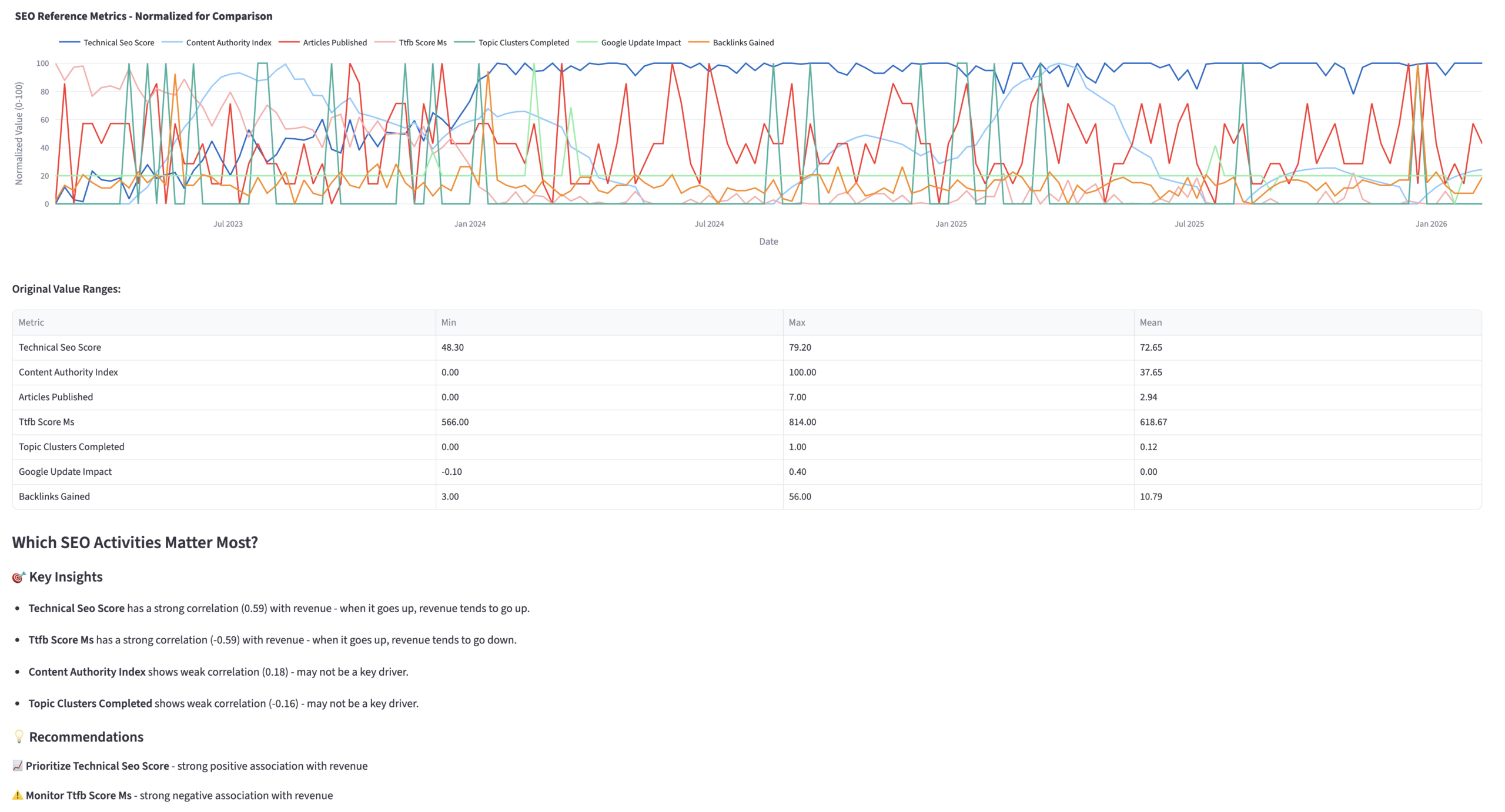
I decided to experiment with building a Bayesian Media Mix Model that incorporates non-paid variables such as SEO sessions, # of articles published, backlink domain authority, seasonal holidays & new product launches. You could substitute SEO activities with SEO expenses the same way you treat paid media budget, but the difference with organic search is that spending money doesn't equate to activity.
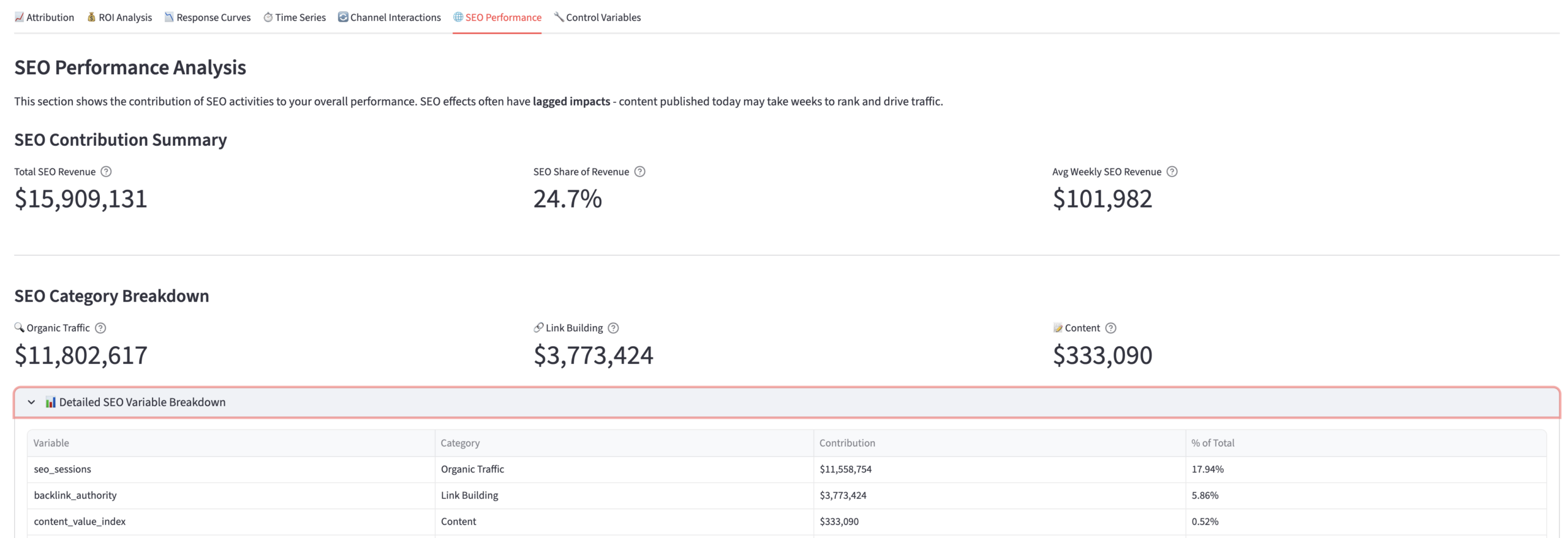
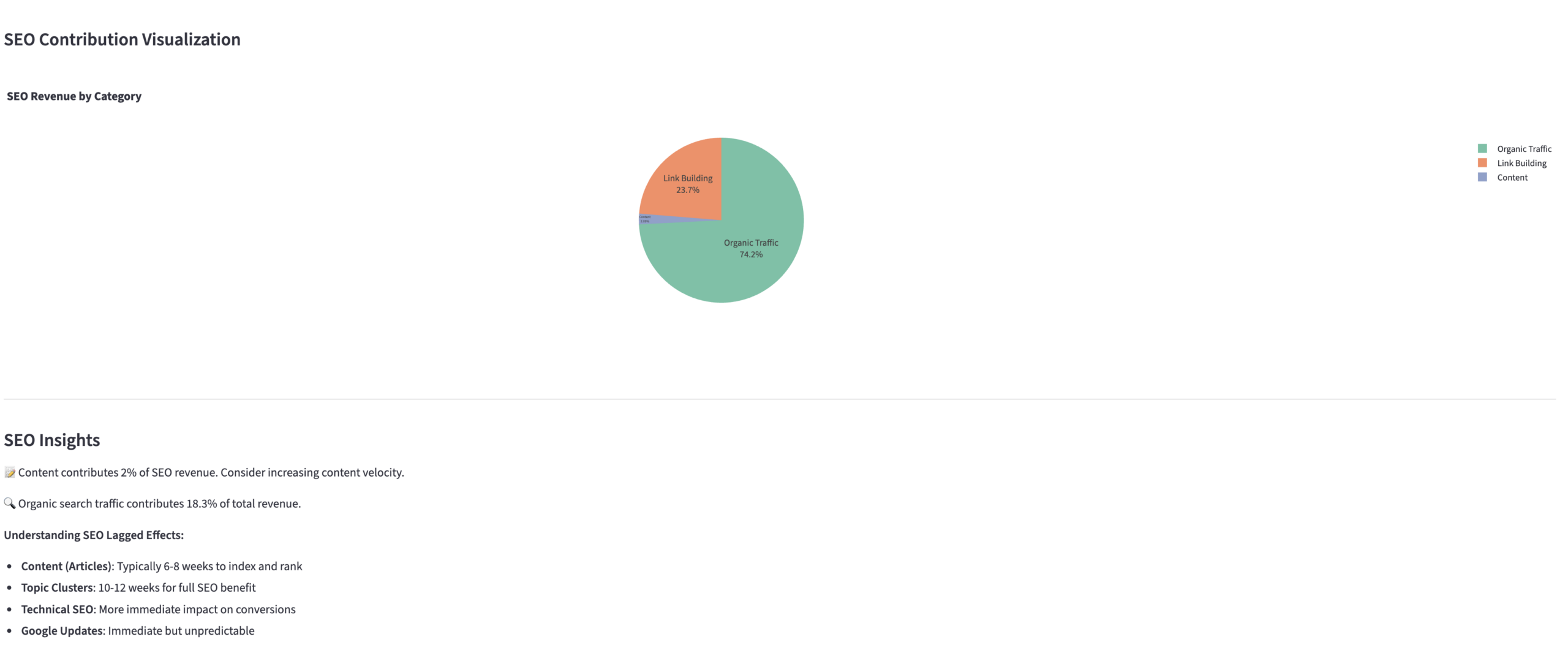
By building in activity with decay rate and lag, I treated SEO activities the same way that paid media budget is treated within the media mix model. The idea here is that each activity contributes positively or negatively to the overall performance of the business while considering external factors that may skew performance.
Multi-Channel Influence
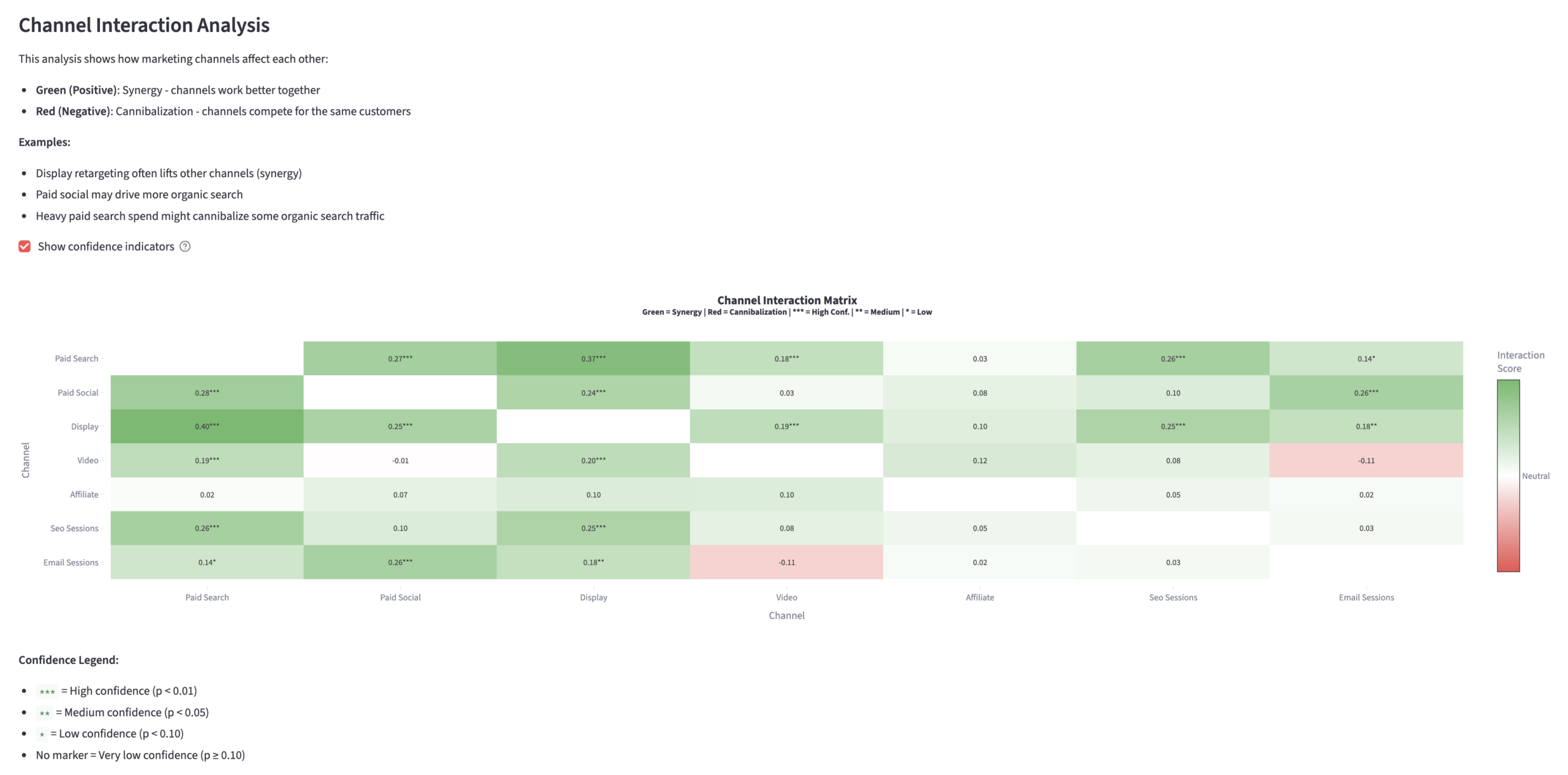
Users don't operate in a single-channel silo. Most people require numerous touch points over a period of time before transacting. So I'm interested in seeing how SEO & paid media channels interact when contributing to revenue.
Conclusion
There is no perfect method of attribution for SEO. But paid media and data science professionals have developed way more sophisticated ways to assess performance than merely looking at web traffic and last-click attribution. SEO's need to think out of the box and develop better ways to talk about the value of their work.